
TL;DR
Stay authentic and visual. Use smart hashtags, video, scheduling tools, and automation. Focus on quality over quantity, mix content types, and embrace trends like AR, UGC, and community-building. Good social media marketing for a real estate business comes down to consistent strategies, not one viral post.
Why Social Media Matters for Real Estate Professionals
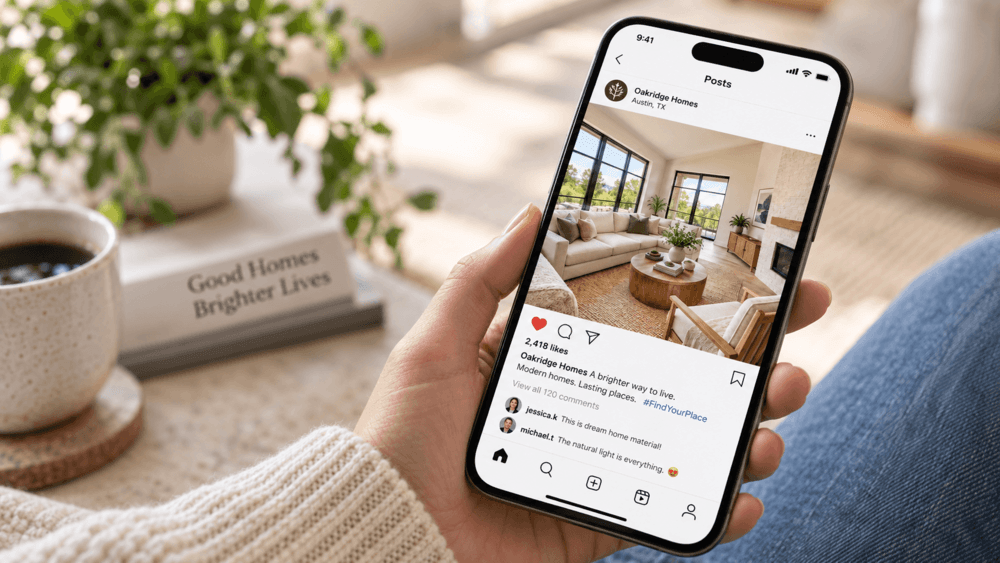
Social media is essential for generating leads, engaging audiences, and establishing thought‑leadership. Listings with compelling imagery and videos perform significantly better. Plus, 88% of home buyers still prefer virtual tours even after the pandemic.
The numbers back this up. According to NAR’s 2025 Technology Survey, 39% of REALTORS say social media produces their highest number of quality leads, ahead of their CRM (23%) and the local MLS (17%). Three in four REALTORS now use social media for business, which makes it less of an edge and more of a baseline expectation.
Key Tips to Elevate Your Real Estate Social Media Strategy
1. Visual Appeal

Visual quality matters more on social media than almost anywhere else in real estate marketing. A feed full of scroll-worthy photos is what stops someone mid-scroll in the first place.
Start with professional listing photos rather than phone snapshots, and keep your design consistent by using the same templates, colors, and fonts across every post so your feed feels like one brand instead of a dozen random uploads. If budget is tight, royalty-free stock photography from sites like Dreamstime or Pexels can fill the gaps without looking generic.
2. Agent‑Driven Content
The best-performing real estate content usually sounds like a person, not a brokerage.
Let each agent’s own voice and tone come through instead of forcing everyone into the same corporate script, and keep posts genuinely useful rather than purely promotional. Trust tends to build well before a sale ever comes up in conversation.
Lead with value. Let the selling follow.
A simple way to put this into practice is to think in terms of three story types. Share your own why, the reason you got into real estate in the first place. Tell a client’s story, with their permission, about finding their first home or finally selling after months on the market. And go beyond a plain neighborhood spotlight into an actual neighborhood narrative: its history, its character, what makes it a place people choose to live. Stories like these do more to build a real estate brand than any listing photo ever could.
Sharing expert advice, not just listings, is what turns a feed of properties into a page people actually follow.
3. Smart Hashtag Use
Hashtags still help new people find your content, as long as they’re chosen with some intention rather than pasted in as an afterthought.
A good mix usually includes something general like #RealEstate, something niche like #BeachHomes, whatever’s trending that week, and a tag specific to your location and target audience. Three to five well-chosen hashtags tend to outperform a longer list, which starts to read as spam rather than reach.
4. Leverage Paid Ads
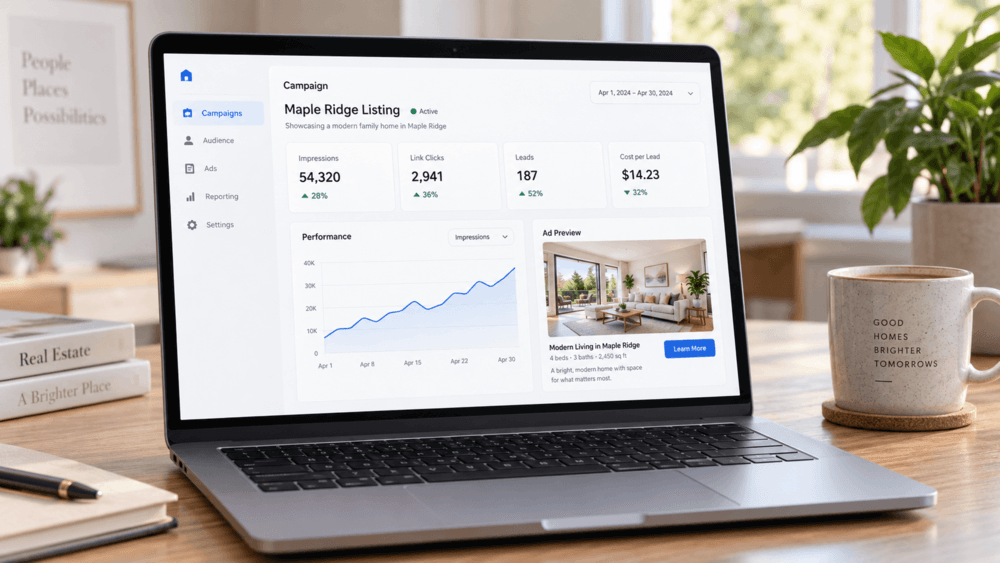
Organic posts can only reach so far on their own. Paid ads extend that reach, but only when they’re used with a real plan behind them.
Display, video, carousel, and story ad formats each work a little differently, so it’s worth matching the format to what you’re actually trying to achieve rather than defaulting to the same one every time.
Set a clear goal before spending anything, run A/B tests on your creative to see what actually resonates, and tighten your audience targeting based on what the results show rather than guessing.
Retargeting is where paid social ads tend to pay off most in real estate advertising. Once someone visits a listing page without reaching out, a follow-up ad showing that same property, or a similar one, keeps a warm lead from going cold. This is digital marketing at its most efficient: reaching people who already showed interest, rather than starting cold every time.
One thing worth knowing before you set up campaigns on Meta: housing ads fall under a special category with Fair Housing protections built in, so you can’t target by age, gender, or zip code the way other advertisers can. Broad geographic targeting paired with audiences built from your own past clients and website visitors is the compliant way to get specific without running afoul of the rules.
5. Incorporate Video Content

Video consistently outperforms static posts, and it doesn’t need to be polished to work well. Live videos for a walkthrough, pre-recorded tours, or a short podcast-style Q&A are all low-effort ways to start. Even a handful of short videos posted consistently outperforms one heavily produced piece a month.
Use that airtime to answer the questions buyers and sellers actually ask, highlight a recent success story, introduce your team, or spotlight a happy client. These are the moments that make an agent feel like a real person rather than just a listing.
6. Run Social Media Contests
A well-timed contest is one of the easiest ways to spike engagement without much production effort.
Polls, quizzes like “vote your favorite kitchen,” and small giveaways all invite people to participate rather than just scroll past. Offering something with real value, like a free property evaluation, or partnering with a local business on the prize, tends to pull in more genuine entries than a generic giveaway ever does.
7. Use Marketing Automation
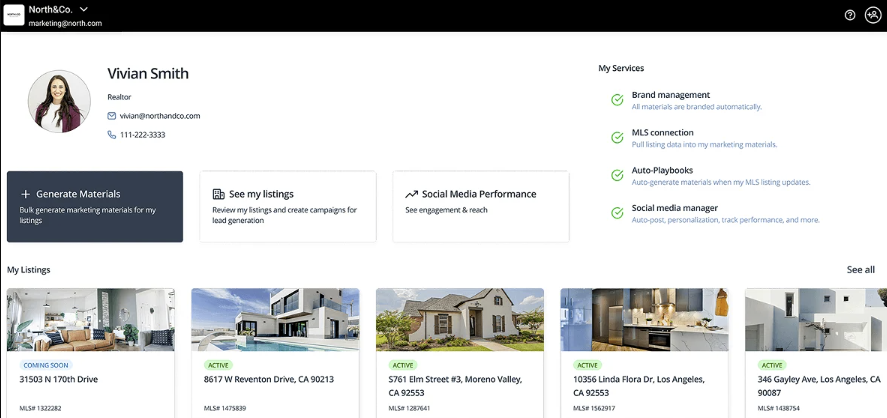
Manually posting to every platform, every day, isn’t realistic for most agents juggling showings and closings.
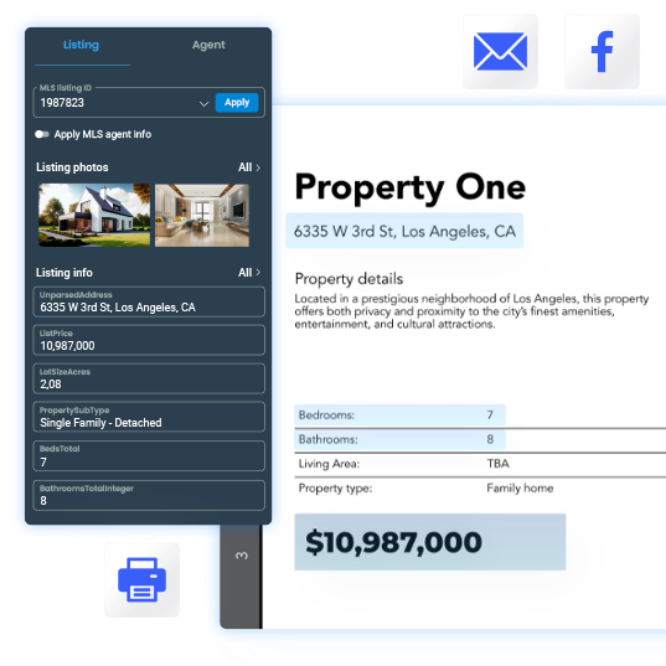
Marketing tools like Xara handle the scheduling and keep branding consistent without the daily lift of doing it by hand, so more of your day goes toward actual potential clients instead of admin work. Getting started usually means importing your brand assets, customizing a handful of templates, training your team on the workflow, and building in a feedback loop to refine what’s working over time.
Agents who automate this part of their marketing typically see a real increase in both lead engagement and lead volume, mostly because nothing slips through the cracks anymore.
8. Build a Social Media Calendar
A content calendar turns social media from a daily scramble into something closer to a repeatable system.
AI-driven planning tools can help map out a full month at a time, and checking your platform’s analytics for peak posting times makes sure that content actually gets seen once it’s live. Rotating between three content pillars, promotional, educational, and trend-driven, keeps a feed from feeling like one long sales pitch.
Posting directly from Xara’s AI Social Media Manager takes this a step further: once the calendar is set, it schedules and publishes automatically, so posting day doesn’t require any manual work at all.
9. Choose Platforms Wisely

Not every platform deserves an equal share of your time, and keeping social media accounts active on all of them at once is rarely realistic.
Prioritize wherever your clients actually spend theirs, whether that’s Facebook, still used by roughly 67% of agents, Instagram, LinkedIn, WhatsApp Business, or TikTok. Spreading yourself across every platform at once usually means doing none of them particularly well, so it’s worth resisting the pull to be everywhere your audience simply isn’t.
Each platform earns its place differently.
Facebook still reaches the widest audience of any platform, 71% of U.S. adults use it, which makes it strong for community groups, local events, and longer posts that don’t fit anywhere else.
Instagram is where listings look their best: high-quality photos, Instagram Reels, and Instagram Stories all perform well, and its younger, visually-driven user base (around 50% of U.S. adults) responds to first-time-buyer content especially well. Stories in particular are worth using on their own for real estate agents who want a lower-pressure format. Because they disappear after 24 hours, they’re a good place for behind-the-scenes moments, quick polls, or a same-day open house reminder, the kind of casual content that would feel out of place in a permanent feed.
TikTok
TikTok rewards authenticity over polish and reaches a younger, first-time-buyer audience through home tours and quick tips.
LinkedIn is less about listings and more about networking, referrals, and positioning yourself as a market expert among other professionals.
YouTube
YouTube has the broadest reach of all, 84% of U.S. adults use it, and it’s the natural home for anything long-form: full property walkthroughs, neighborhood guides, or a “moving to [city]” video that keeps generating views for years.
Twitter/X
Twitter, now X, moves fast and rewards agents who show up for real-time conversation: market news, quick updates, and engaging directly with local accounts. It won’t carry a listing the way a photo-first platform will, but it’s a reasonable place to build visibility among other local professionals and industry voices.
Pinterest is a smaller piece of most agents’ strategy, but it’s worth knowing about for two reasons: its audience skews toward home design and lifestyle content, and pins tend to keep driving traffic long after they’re posted. A board organized by property type or neighborhood can quietly work in the background for months.
10. Balance Content Pillars
Consistency in what you post matters just as much as consistency in how often.
A healthy mix usually includes trendy content that stays current with features, neighborhoods, or design shifts, promotional content that highlights listings, deals, and open houses, and educational content that shares industry news, market insight, and practical how-tos.
Balancing all three keeps a feed from tipping too far in either direction, either too salesy to follow or too generic to remember.
As you refine your promotional mix, don’t overlook the role of events like open houses in your strategy. Knowing how to approach open house marketing can make a measurable difference, especially when you combine social media posts, email outreach, and local targeting to drive attendance. When these efforts are automated and consistent, each event becomes another opportunity to expand reach without adding to your workload.
30 Real Estate Social Media Post Ideas
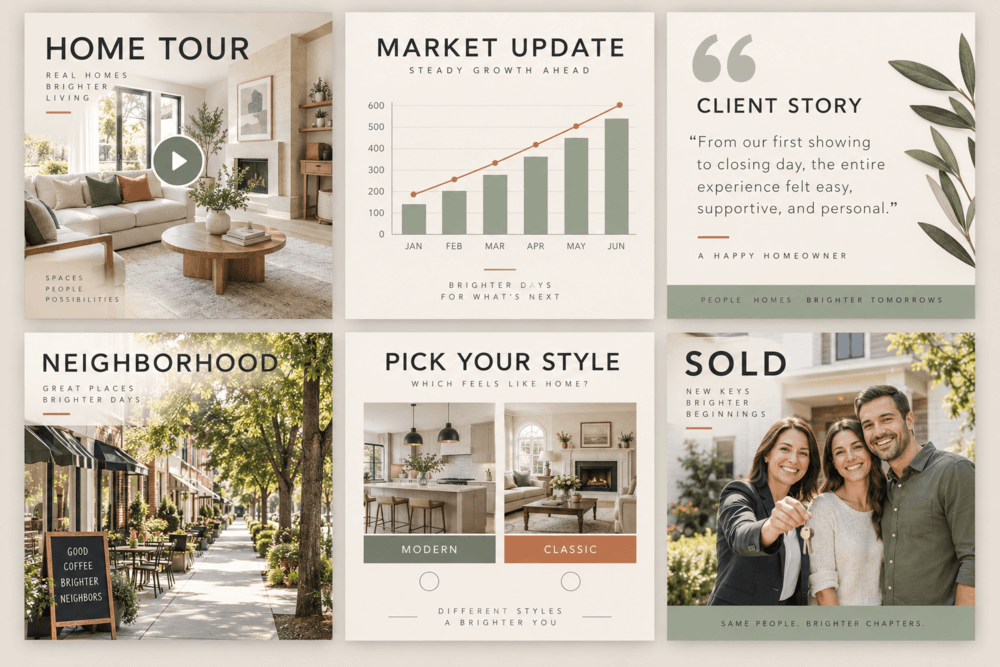
Knowing the strategy is one thing. Actually knowing what to post on a random Tuesday is another. Here are 30 content ideas real estate agents can use to keep a feed full, organized by what they’re meant to accomplish.
Property content
- Home tour video. A quick walkthrough hitting a listing’s best rooms.
- Live virtual open house. Stream it for buyers who can’t attend in person.
- Luxury spotlight. High-end homes shared purely for the engagement, even outside your usual range.
- Pet-friendly features. Big yards, mudrooms, a nearby dog park.
- “Why I love this home.” One detail a listing photo alone wouldn’t catch.
- Before and after. A staging or renovation transformation.
Market and education
- Local market snapshot. What’s happening in your area this month.
- First-time buyer tip. Something like what pre-approval actually involves.
- Weekly tip series. A recurring slot people start to expect, like “Tip Tuesday.”
- Common mistake, explained. Turn a buyer or seller misstep into a teaching moment.
- Myth busted. “You need 20% down” and other misconceptions.
- Rate or inventory update. A quick, plain-English market data point.
Community and lifestyle
- Neighborhood guide. Coffee shops, parks, and schools nearby.
- Local business shoutout. Often gets reshared back to you.
- Seasonal post. Tied to the time of year.
- Eco-friendly feature. Solar panels, smart thermostats, efficiency upgrades.
- Weekend staging tip. A budget curb-appeal fix a seller could do right away.
- #ThrowbackThursday. How the market, or your own journey, has changed.
Engagement and interactive
- Poll or quiz. “Which kitchen would you choose?”
- Live Q&A. Answer the questions buyers and sellers actually ask.
- This or that. A quick visual comparison post.
- Contest or giveaway. A small local prize tied to a simple ask.
- Real estate trivia. A quick fact that stops the scroll.
- Comment prompt. A simple opinion question tied to a listing photo.
Authority and personal branding
- Client testimonial. Ideally with a specific result attached.
- Success story. “Sold in 48 hours, $20K over asking.”
- Behind-the-scenes. Paperwork, late showings, the unglamorous parts.
- Milestone post. A closing anniversary or years-in-business marker.
- Motivational quote. Short and on-brand, used sparingly.
- Closing day photo. The moment keys change hands.
Dos & Don’ts at a Glance

Dos:
Showcase your human side.
Maintain a consistent brand across platforms. This includes keeping your Google Business Profile up to date, since it’s often the first thing a search on Google turns up.
Engage actively and promptly. Treat DMs like the hot leads they usually are, since clients messaging you directly are often further along than a comment or a like, and it’s a good source of new content ideas too.
Share informative, helpful content.
Don’ts:
Ignore privacy regulations.
- Skip disclosure on sponsored content. The FTC requires a clear #ad or #sponsored tag any time you’re promoting a paid partnership, and it’s a legal requirement, not just good etiquette.
Delete criticism, and instead handle negativity professionally.
Overwhelm with sales content.
Use one‑size‑fits‑all approaches across platforms. Social media content that works on one of your social media channels rarely translates directly to another without some adjustment.
Be inconsistent in posting.
Industry Trends to Watch
The best social media marketing strategies today look different than they did even a year ago. Here’s where things are headed.
Short‑form videos, live tours, and immersive visuals dominate.
AR/VR property experiences are growing.
Niche communities (e.g., eco‑homes, luxury properties) are effective.
Sustainability content resonates.
User‑generated content (UGC) enhances engagement.
Interactive features like polls and shoppable posts are rising.
Podcasts can boost credibility and connection.
AI tools help, but they don’t replace human creativity and strategy.
Next Steps
After reading, put these strategies into practice for your real estate business:
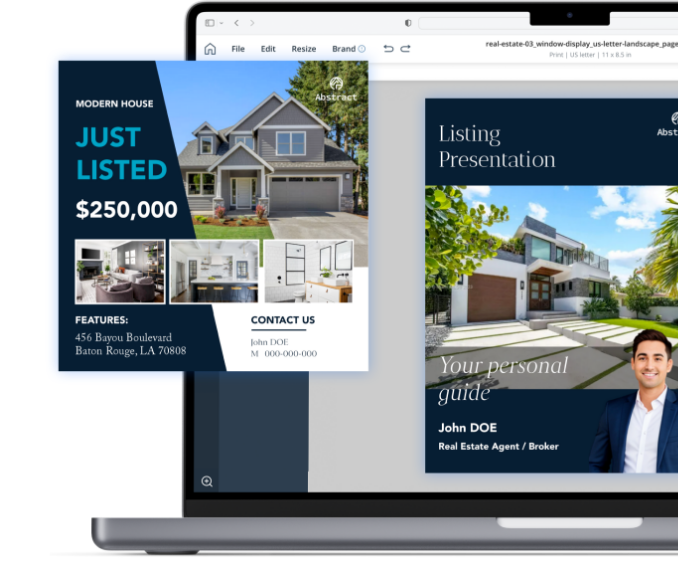
Browse Xara’s real estate templates.
Customize using Xara’s built-in AI tools for better text.
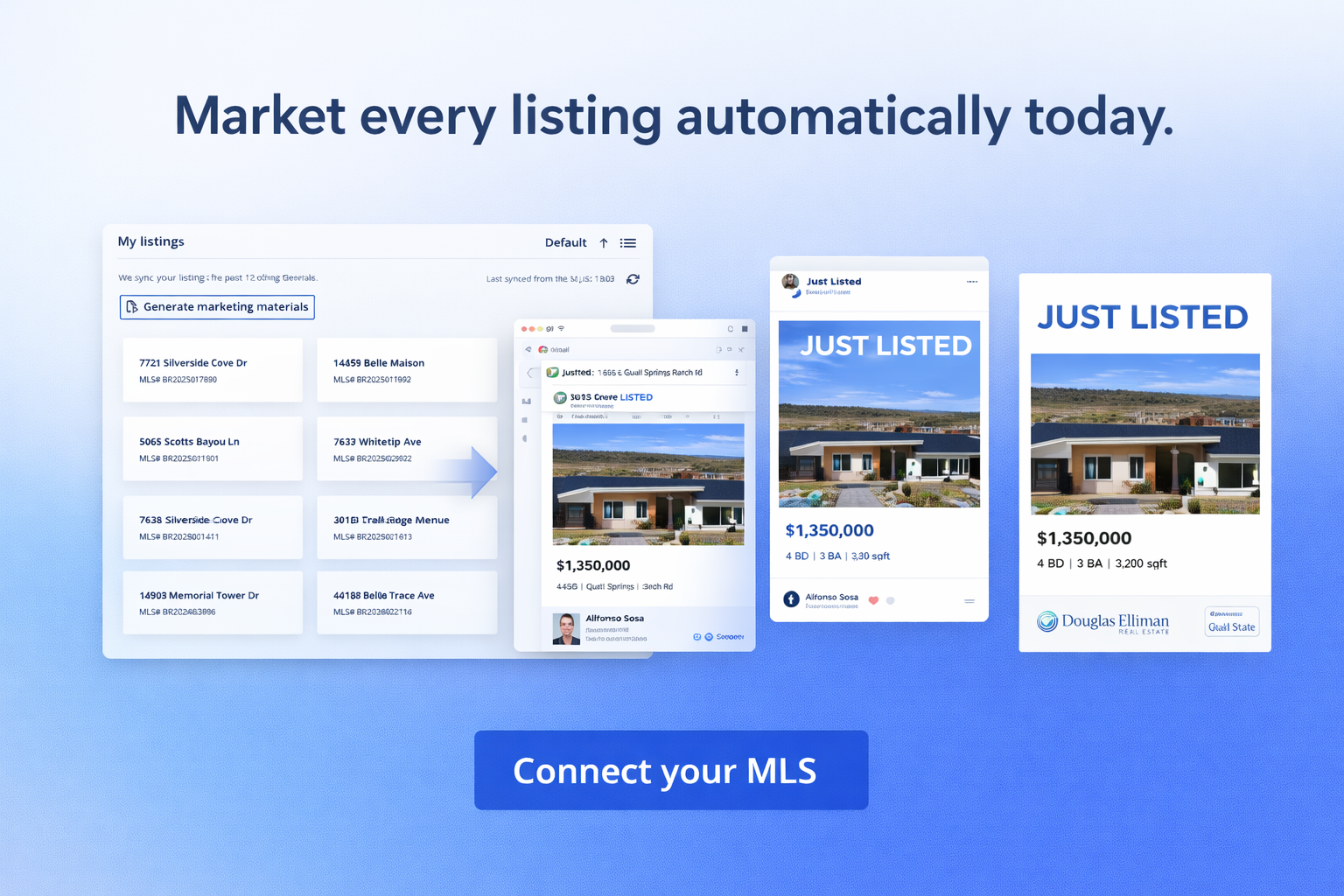
Download, post, or schedule your designs easily. Start with Xara’s free trial and put these marketing tips to work on your very next post.
Q&A
A few more social media ideas people often ask about, from Facebook basics to Facebook advertising and beyond:
Q: What’s the best format for real estate social media posts?
A: Aim for visually compelling posts, using high‑quality images or templates and concise, authentic captions. This is the foundation of effective social media marketing for any listing.
Q: How many hashtags should I include?
A: Use 3–5 carefully chosen hashtags, since too many can harm visibility and seem spammy.
Q: What kind of content should I post?
A: Mix three pillars: trend‑based posts, listing promotions, and educational insights. This strategy builds trust and engagement.
Q: How can I save time creating content?
A: Use automation and scheduling tools like Xara to import brand assets, customize templates, train your team, and monitor feedback, all without doing it manually.
Q: What is the 3-3-3 rule in real estate?
A: It’s a way of structuring your day: three hours on prospecting, three hours on follow-up, and three hours on appointments. It’s not a social media rule specifically, but it’s a common framework for making sure content creation doesn’t crowd out the rest of an agent’s workload.
Q: What is the 5:3:2 rule for social media posts?
A: Out of every 10 posts, five should share other people’s content or industry news, three should be your own original content, and two can be directly promotional. It’s a simple way to keep a feed from feeling like a constant sales pitch.
Q: How often should I be posting?
A: Consistency matters more than frequency. A few solid posts a week on one or two platforms will outperform daily posting spread across five. Pick a pace you can actually sustain, then stick to it.
Q: How do I get more followers?
A: Followers tend to follow value, not the other way around. Post content people actually want to see, engage with comments and DMs promptly, and collaborate with other local accounts and businesses. Growth that comes from paid followers or gimmicks rarely converts into real leads.
Q: What is the best social media platform for real estate?
A: There isn’t one universal answer. Facebook still reaches the broadest real estate audience and works well for community-building, Instagram is strongest for showing off listings visually, and many realtors find LinkedIn valuable for referrals and professional networking. The best platform for real estate marketing is usually the one or two where your specific clients already spend their time, not whichever platform is trending.





 No credit card or phone number required.