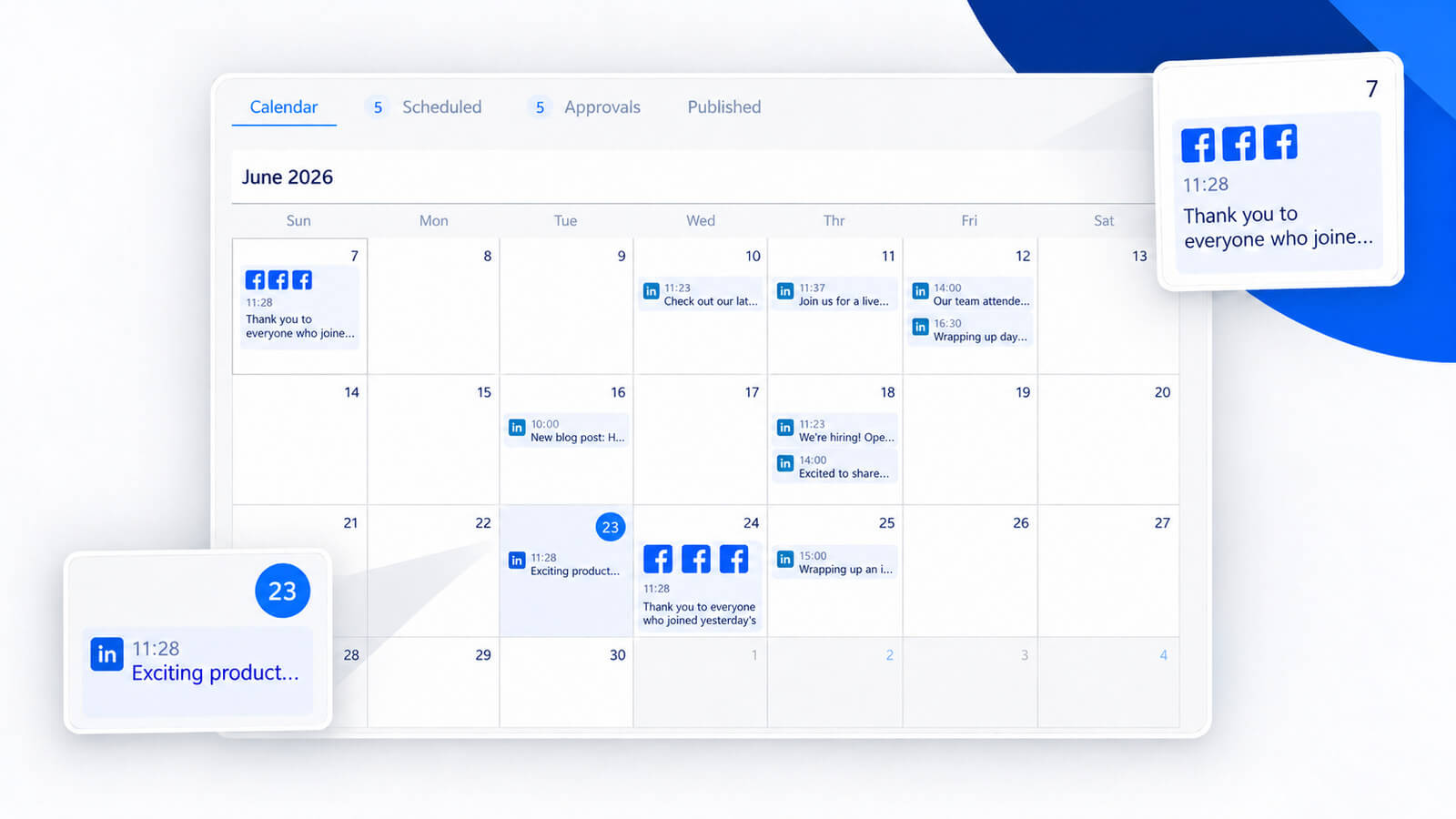
TL;DR: This 30-day real estate social media calendar gives agents one practical content idea for every day of the month, mixing buyer and seller education, local market expertise, community content, client questions, personal perspective, client proof and listings.
You don’t need to publish all 30. Pick the ideas that fit what’s actually happening in your business, adapt them to your market and use this calendar template to stop starting from a blank page every time you want to post.
Think of it less as a rigid schedule and more as a repeatable system: the same marketing calendar structure, refreshed with new local details each month.
Why use a real estate social media content calendar?
A real estate social media calendar answers one deceptively difficult question in advance: what should I post today?
Without a plan, it’s easy for an agent’s feed to become a sequence of Just Listed, Open House and Just Sold graphics, or to go quiet altogether when business gets busy.
A calendar template gives the content some structure. Instead of inventing a topic every time you open Instagram or Facebook, you already have a mix of buyer questions, seller education, local knowledge, listings and real-world expertise to draw from, which speeds up content creation considerably.
Social media is already a significant part of real estate marketing. In the 2025 REALTORS® Technology Survey from the National Association of REALTORS®, 75% of respondents said they used social media in their real estate business. When asked which technology had produced their highest number of quality leads, social media ranked first at 39%, ahead of CRM systems at 23% and local MLSs at 17%.
The point isn’t that every agent therefore needs to post every day. It’s that when social media is part of your marketing, having a useful content system beats deciding what to say from scratch each time.
This calendar uses eight content types:
- Buyer education: questions buyers repeatedly ask.
- Seller education: pricing, preparation, timelines and the selling process.
- Local market expertise: actual information from the market you serve.
- Market context: translating housing news and trends into something locally useful.
- Neighborhood and community: local businesses, events, places and information.
- Client questions: real questions from real conversations.
- Personal and professional expertise: what you know, notice and do behind the scenes.
- Listings and client proof: properties, transactions and results with more context than “Just Listed.”
Social media marketing: where should real estate agents post?
You don’t have to be on every social network. Choose platforms based on where your audience is, what formats you can realistically create and what your own performance data tells you.
Useful for visual property content, short-form video, carousels, Stories, local content and behind-the-scenes posts.
Useful for property content, local/community posts, past-client audiences, longer captions and conversations around local topics.
Useful when you want to emphasize professional expertise, market analysis, business relationships and referral networks alongside selected listing content.
There are other options too, including TikTok and YouTube. NAR’s 2026 Member Profile reports that about 16% of REALTORS® use TikTok professionally. The right choice depends on the audience you are trying to reach rather than which platform happens to be fashionable.
Xara’s Social Media Manager currently creates and posts content to Facebook, Instagram and LinkedIn.
Now, onto the calendar.
Your 30-day real estate social media calendar template

Week 1: Establish your expertise and your market
Day 1: Local market snapshot
Content type: Market context | Suggested format: Carousel or simple data graphic
Pick one current statistic from your local market and explain it. Good options include active inventory, median sale price, median days on market, new listings, or sale-to-list-price ratio. Don’t dump an entire market report into the caption. Give people one number and answer: why should a buyer or seller care?
Example hook: “Inventory in [market] changed from X to Y homes this month. Here’s what buyers are actually noticing because of it.”
Source it from: your MLS or another clearly identified primary local housing-data source.
Day 2: Bust the 20%-down myth
Content type: Buyer education | Suggested format: Carousel
A lot of prospective buyers assume they need a 20% down payment. Explain that mortgage options vary. The Consumer Financial Protection Bureau’s down-payment guidance says that in most cases buyers need at least 3% of the target home price, while many loan types and lenders require 5% or more. Individual eligibility and costs vary.
Example hook: “Do you really need 20% down before you can buy a home? Not necessarily.”
Keep the post educational rather than recommending a particular mortgage to an individual buyer.
Day 3: Explain one real estate term using your market
Content type: Local expertise | Suggested format: Talking-head video or carousel
Choose something clients regularly ask about: months of inventory, earnest money, appraisal contingency, days on market, sale-to-list ratio. Then use a real local example instead of posting a dictionary definition.
Day 4: What is actually worth doing before listing photos?
Content type: Seller education | Suggested format: Before/after carousel or short video
Pick two or three practical things you regularly notice before a listing goes live. The value here is your first-hand experience. Avoid turning it into another generic “10 ways to prepare your house” list.
Day 5: Why is this listing priced where it is?
Content type: Listing + expertise | Suggested format: Listing carousel
Instead of simply posting the price, explain some of the considerations behind the positioning: comparable properties, condition, location, competing inventory, recent local activity. Don’t disclose confidential information or imply that asking price and market value are automatically the same thing.
Day 6: A local place you genuinely recommend
Content type: Neighborhood/community | Suggested format: Photo, Reel or Story
Feature a coffee shop, restaurant, park, independent business or weekend spot you actually know. Explain why you chose it. “Five best cafés in [city]” can be written by anyone. “I’ve been getting coffee here before Saturday showings for three years, and this is what I order” is much harder to fake.
Day 7: Why did you get into real estate?
Content type: Personal/professional | Suggested format: Photo + caption or talking-head video
Tell the actual story. Skip the polished elevator pitch. Specificity makes personal content interesting.
Week 2: Answer the questions clients are already asking
Day 8: Why has local inventory changed?
Content type: Market context | Suggested format: Carousel
Show what changed first. Then explain possible contributing factors, making a clear distinction between the data and your interpretation of it.
Day 9: Pre-approval vs. pre-qualification
Content type: Buyer education | Suggested format: Simple comparison carousel
Explain the terms plainly and encourage buyers to confirm the specifics with their lender. The goal is client education, not mortgage advice.
Day 10: This year vs. last year
Content type: Local expertise | Suggested format: Comparison graphic
Choose one useful metric: this month last year (X) vs. this month now (Y). Then explain what has, and hasn’t, changed.
Day 11: How does a seller think about pricing strategy?
Content type: Seller education | Suggested format: Talking-head video
Avoid claims such as “pricing below market sells homes faster and for more” unless you have market-specific evidence supporting them. A better post explains the trade-off.
Example hook: “Why isn’t the highest possible asking price automatically the best pricing strategy?” Then explain how competition, comparable sales, current inventory and buyer behavior factor into the discussion.
Day 12: Show what listing photos can’t
Content type: Listing-related | Suggested format: Reel
Choose one feature that is better understood in motion or with explanation: room flow, a view, natural light, storage, outdoor space, architectural detail.
Example hook: “The listing photos show this room. They don’t really show this.”
Day 13: What’s happening locally this weekend?
Content type: Neighborhood/community | Suggested format: Carousel or Story
Choose a few genuine local events. Link or tag the organizers so followers can check current information directly.
Day 14: Answer a real client question
Content type: Client question | Suggested format: Video, carousel or text post
Think about the questions you’ve answered in calls, emails or showings this week. Pick one.
Example opening: “A buyer asked me this yesterday…” That is usually a stronger starting point than searching the internet for “questions buyers ask agents.”
Week 3: Turn your experience into content

Day 15: Put a national housing headline into local context
Content type: Market context | Suggested format: Carousel or video
Start with the headline. Then compare it with your actual local data. Avoid pretending one market represents the entire country, or that a national trend automatically describes your ZIP code.
Day 16: What do you notice during a showing?
Content type: Buyer education + expertise | Suggested format: Reel
Show two or three things you tend to look at beyond décor: signs of moisture, unusual repairs, room flow, age or condition of major systems, questions worth asking about renovations. Be useful without presenting yourself as a substitute for a qualified home inspector.
Day 17: What’s changing in one part of your market?
Content type: Local expertise | Suggested format: Data-led carousel
Instead of declaring that a neighborhood is “hot,” show the evidence: inventory change, transaction volume, days on market, price movement, new development activity. Use neutral, objective information.
When creating neighborhood or housing content, remember that the Fair Housing Act applies to housing-related advertising. HUD identifies race, color, religion, sex, national origin, familial status and disability as protected characteristics. The safest approach is to describe properties, amenities and objective local information rather than suggesting that a neighborhood is suited to a particular protected group.
Day 18: What do sellers need to know about disclosures?
Content type: Seller education | Suggested format: Educational carousel
Don’t create a national list of “things sellers must disclose.” Disclosure requirements vary by state and transaction. Instead, explain why disclosures matter, mention an example relevant to your jurisdiction, and point readers toward the appropriate local requirements or professional advice.
Day 19: Tour one room, not the entire house
Content type: Listing-related | Suggested format: Reel
Choose the most interesting room or feature and make that the story. One strong idea often makes a better short-form video than trying to squeeze an entire property tour into 30 seconds.
Day 20: Spotlight a local business
Content type: Neighborhood/community | Suggested format: Photo or short video
Choose somewhere you genuinely know. Tag the business where appropriate, but don’t promise that doing so will automatically increase reach or earn a reshare. The content should still be worthwhile even if the business never interacts with it.
Day 21: Tell a negotiation story
Content type: Professional expertise | Suggested format: Caption-led post or video
Remove identifying or confidential details. Structure it around: the problem, what mattered, how you approached it, what you learned. The lesson is more interesting than simply telling followers that you’re a great negotiator.
Week 4: Demonstrate local knowledge and client value
Day 22: Explain a local development
Content type: Market context | Suggested format: Carousel
Choose a development, infrastructure project or planning decision that is genuinely relevant to your market. Separate what’s confirmed from what might happen. Be particularly careful with claims about future property values. Unless you have strong evidence, don’t tell homeowners that a development will make their property more valuable.
Day 23: What happens after an offer is accepted?
Content type: Buyer education | Suggested format: Timeline carousel
Walk through the major stages a buyer may encounter between acceptance and closing. Make clear that timelines and requirements vary by transaction, financing and state.
Day 24: Explain one local housing statistic in under a minute
Content type: Local expertise | Suggested format: Short video
Choose a number buyers and sellers rarely see, such as the share of active listings with a price reduction or the average price per square foot. Then answer three things: what is it, what changed, and why might a buyer or seller care?
Day 25: How long are homes taking to sell?
Content type: Seller education | Suggested format: Data graphic
Use current local data. Don’t tell sellers that “homes sell in X days” based on a national average when your market says something different.
Day 26: Turn a Just Sold into a mini case study
Content type: Client proof | Suggested format: Carousel
Don’t stop at “JUST SOLD.” Tell the useful part of the story: what was distinctive about the property, what was the marketing approach, what problem came up, what did you learn, what can another seller learn from it. Respect client confidentiality and get permission where necessary.
Day 27: Share something newcomers often miss
Content type: Neighborhood/community | Suggested format: Reel or photo carousel
A walking route, an architectural detail, a market, a public space, a local institution. Use first-hand knowledge. Avoid claims such as “best neighborhood for families” or “perfect area for young professionals.” Focus instead on objective amenities and what is actually there.
Day 28: Bust a real estate myth
Content type: Client question | Suggested format: Myth/fact carousel
Choose one you actually hear, like “spring is always the best time to sell.” Instead of simply declaring it false, show what your historical local data says about seasonality.
Bonus days
Day 29: Share a lesson from your own transaction
Content type: Personal/expert | Suggested format: Story-led post
If you’ve personally bought or sold a home, share one thing the experience taught you. First-hand perspective is the point.
Day 30: Ask your audience something
Content type: Engagement | Suggested format: Poll, Story, carousel or comments prompt
Try: which kitchen would you choose, guess the listing price, which renovation would you do first, what’s one thing about buying a home you wish someone would explain, or ask me anything about buying or selling in [market]. The responses can become next month’s content ideas.
Your social media content calendar template at a glance
| Day | Content type | Post idea | Format |
|---|---|---|---|
| 1 | Market context | One current local market statistic | Carousel |
| 2 | Buyer education | Do buyers need 20% down? | Carousel |
| 3 | Local expertise | Explain one real estate term locally | Video |
| 4 | Seller education | What to do before listing photos | Before/after |
| 5 | Listing | Explain the pricing context | Carousel |
| 6 | Community | A local place you genuinely recommend | Reel/photo |
| 7 | Personal | Why you entered real estate | Video/photo |
| 8 | Market context | Why local inventory changed | Carousel |
| 9 | Buyer education | Pre-approval vs. pre-qualification | Carousel |
| 10 | Local expertise | This year vs. last year | Graphic |
| 11 | Seller education | Explain pricing strategy | Video |
| 12 | Listing | Show what the photos don’t | Reel |
| 13 | Community | Local weekend events | Stories/carousel |
| 14 | Client question | Answer a real question from this week | Video |
| 15 | Market context | National headline vs. local reality | Carousel |
| 16 | Buyer education | What you notice at showings | Reel |
| 17 | Local expertise | What’s changing locally? | Data carousel |
| 18 | Seller education | Explain disclosures carefully | Carousel |
| 19 | Listing | Tour one standout room | Reel |
| 20 | Community | Local business spotlight | Photo/video |
| 21 | Expertise | A negotiation lesson | Story/video |
| 22 | Market context | Explain a local development | Carousel |
| 23 | Buyer education | Accepted offer to closing | Timeline |
| 24 | Local expertise | One housing statistic explained | Video |
| 25 | Seller education | Current days on market | Data graphic |
| 26 | Client proof | Turn Just Sold into a case study | Carousel |
| 27 | Community | Something newcomers often miss | Reel |
| 28 | Client question | Bust a common myth | Carousel |
| 29 | Personal | Lesson from your own transaction | Story |
| 30 | Engagement | Ask your audience | Poll/Q&A |
How to turn this template into a marketing plan you’ll actually use
This realtor social media calendar template is a 30-day idea bank, not 30 assignments you owe the internet. You can post daily if that genuinely works for your business, or treat it as a looser plan and choose three, four or five ideas each week, leaving the other days empty.
There is no credible universal number of weekly posts that guarantees better results for every real estate agent. Your audience, platform, market, format and content quality all matter. A better rule is: choose a cadence you can maintain, measure what happens, and adjust from your own results.
The content type column is therefore more important than the day number. If local market posts consistently earn saves, replies or conversations, make more of them. If buyer questions perform well, turn them into a recurring series. If a format consistently goes nowhere, don’t keep publishing it because a generic social media marketing benchmark told you to.
Once you’ve picked your days, turn the plan into an actual social media posting schedule, whether that’s a shared calendar app, a note on your phone, or a simple recurring reminder, so the plan survives your busiest weeks too.
Turn one idea into several pieces of content

You also don’t need 30 completely separate production sessions. Suppose you record a five-minute local market update. That one recording might become a short Reel explaining the headline number, a carousel showing three statistics, a Story poll about buyer sentiment, a Facebook post with more context, and a LinkedIn post explaining the professional takeaway.
Likewise, a listing can create more than one “Just Listed” post: the initial listing announcement, a short room tour, a post about one unusual feature, an Open House announcement, a pricing/context post, and a later Just Sold case study.
The goal is not to copy and paste the exact same post everywhere. It’s to get more useful content from information you already have.
Keep a source list for factual posts
Some social content is opinion or personal experience. Some isn’t. If you’re posting about mortgages, market statistics, laws or housing regulations, know where the information came from.
Useful starting points include the Consumer Financial Protection Bureau for mortgage and homebuying information, NAR’s research and statistics for industry data, and the U.S. Department of Housing and Urban Development for Fair Housing guidance. For local statistics, use your MLS or another clearly identified primary source; for events and developments, use the organizer, municipality, or other first-party source wherever possible.
Your caption doesn’t need to read like an academic paper. You should simply be able to answer: where did this claim come from?
What a static 30-day calendar can’t do
This calendar gives you 30 ideas. Next month, your market will be different. You’ll have different listings, different client questions, different events, different housing data, different things happening in the neighborhoods you serve.
That’s why the long-term challenge isn’t having a document with 30 evergreen prompts. It’s continuously finding fresh things worth talking about.
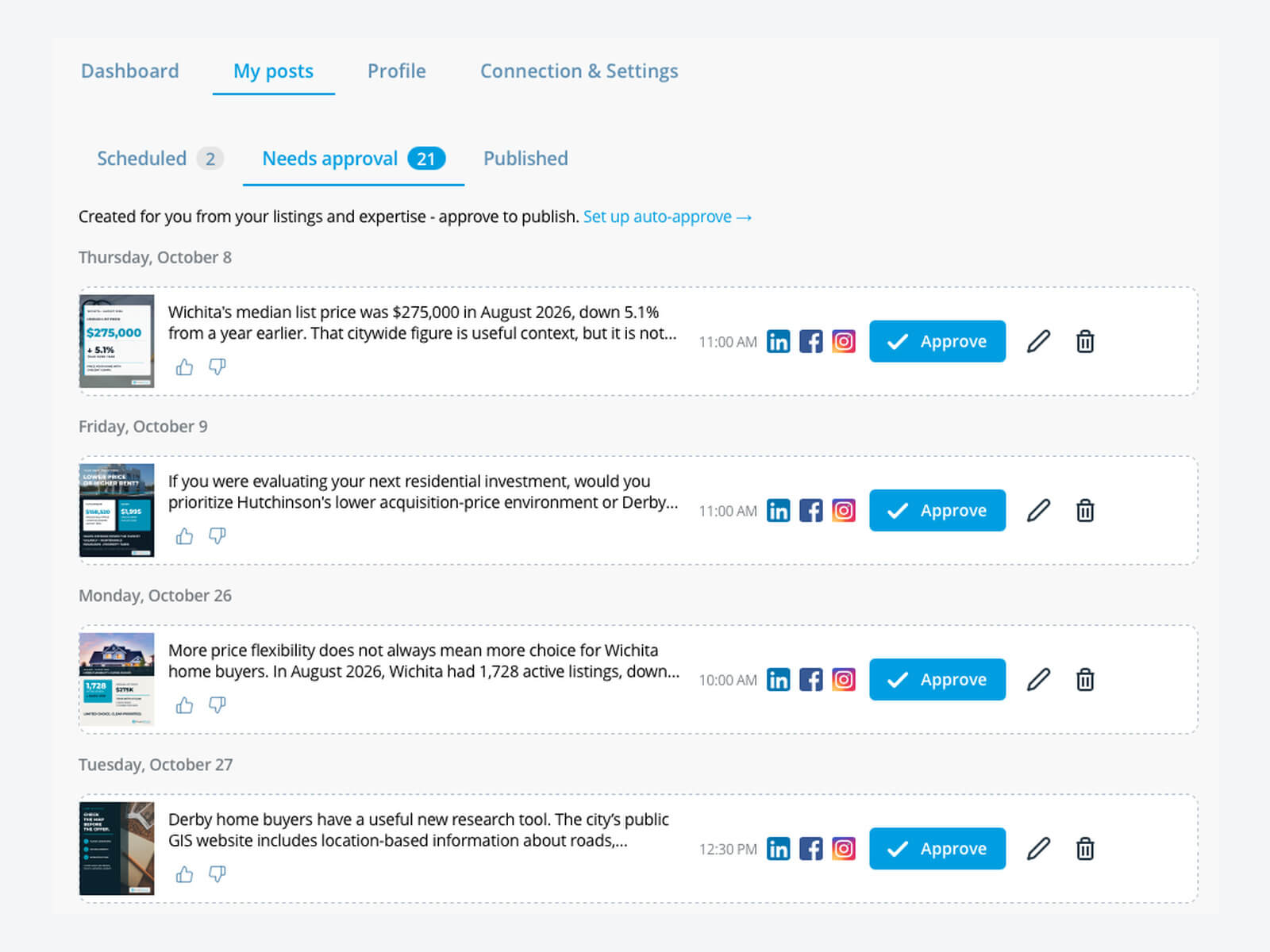
That is where Xara’s Social Media Manager takes this idea further. Instead of handing an agent a static calendar and leaving them to execute it, Xara builds and maintains the content queue, combining two types of real estate content.
When something happens with a listing
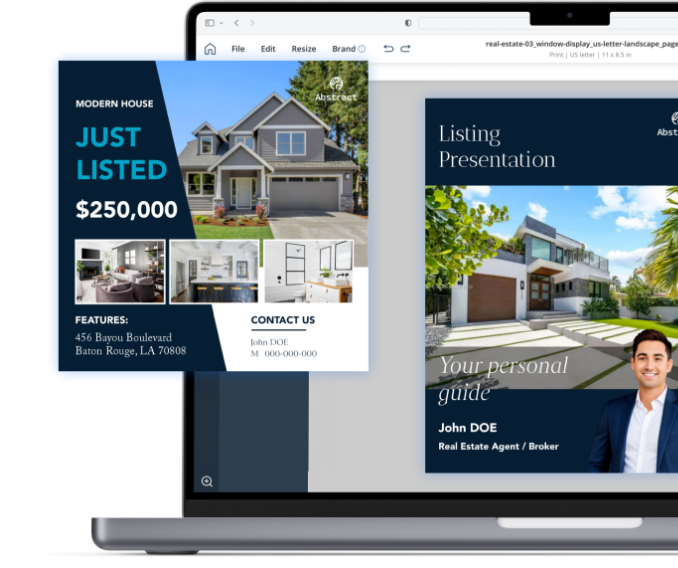
Xara can use MLS listing activity to create social content around events such as Just Listed, Open House, Price Reduction, Under Contract, and Just Sold. The listing information, imagery and brokerage branding feed into the content rather than requiring the agent to rebuild the post manually.
Between listings
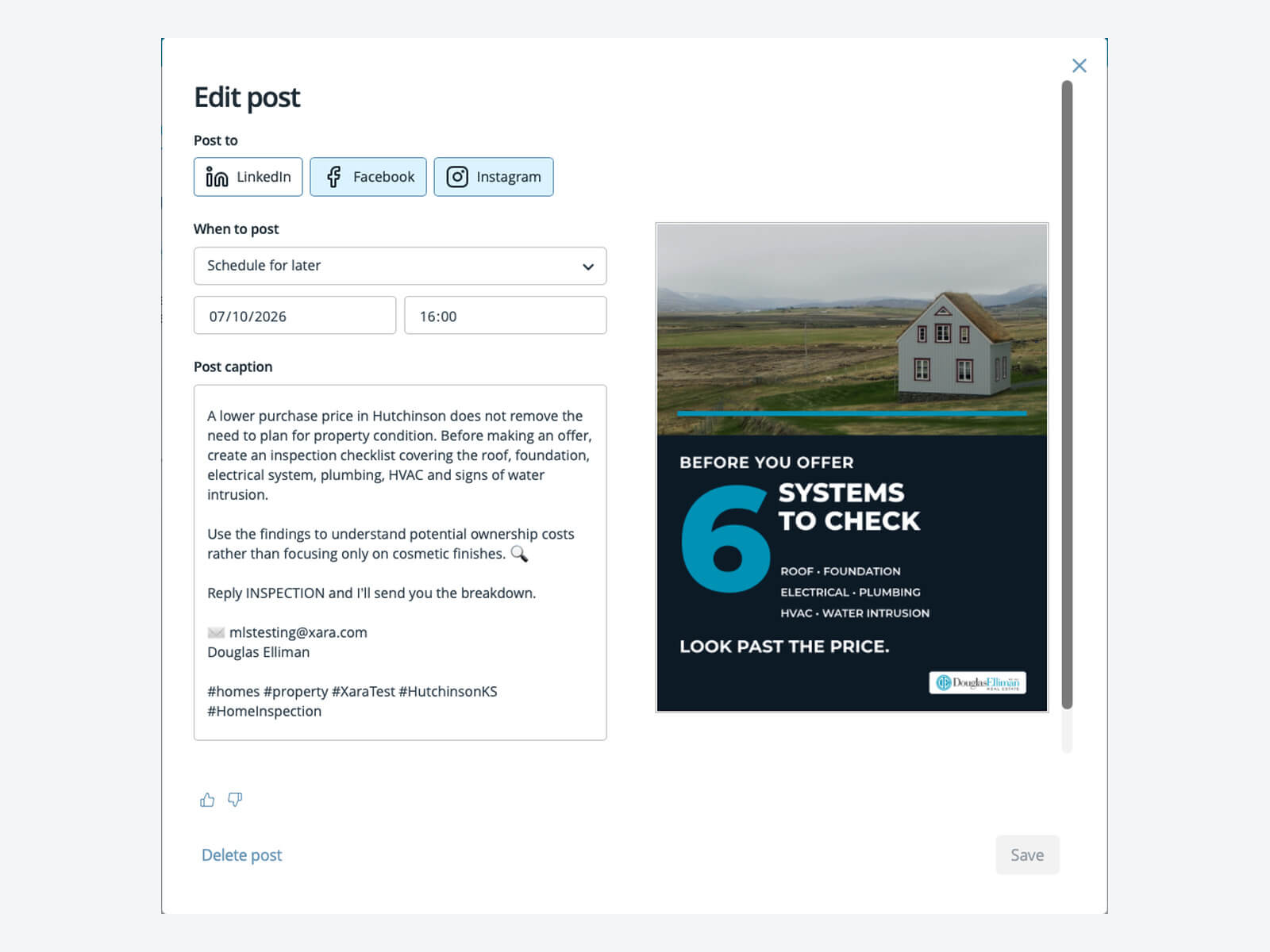
The calendar can be filled with content such as neighborhood insights, local market updates, buyer and seller education, seasonal and local-event content, and agent expertise. Xara creates the visual, writes the caption and schedules the post for Facebook, Instagram or LinkedIn. Agents and admins can still review, edit or remove content from the queue.
In other words, the calendar you’re looking at in this article is the manual version of the problem. Xara turns it into an ongoing system.
What does that look like in a real brokerage?
At Collier & Associates, a 250+ agent independent brokerage in Northwest Arkansas, Xara generates roughly 650 pieces of listing marketing per week, and 31% of campaigns are automatically posted to social media.
Founder and Principal Broker Stuart Collier describes the result this way:
“We have every kind of agent, from top producers to part-timers, and now marketing goes out for all of them, on brand, on the moments that move a sale.”
You can read the full Collier & Associates customer story.
ReeceNichols South Central Kansas uses Xara across two MLS feeds. When a home changes status, the system creates social posts with captions alongside other listing-marketing materials, personalized to the listing agent and brokerage brand. See the ReeceNichols customer story.
And on Xara’s customer-story hub, Broker Associate Shawna H. describes the impact on her own social presence:
“Xara supercharged my real estate social media engagement and branding.”
Her review specifically highlights listing-triggered social packages and Xara’s Social Media Manager. See more real estate customer stories and reviews.
Frequently asked questions
What should a real estate social media calendar include?
A useful real estate social media calendar should mix listings with buyer and seller education, local market information, neighborhood/community content, client questions, client proof and the agent’s own professional experience. The purpose of the mix is to give people reasons to follow the agent even when they aren’t currently looking at one of their listings.
How often should a real estate agent post on social media?
There is no universal posting frequency that guarantees better results for every real estate agent. Choose a cadence you can sustain without sacrificing accuracy or usefulness, then use your own platform data to evaluate it. A 30-day realtor social media calendar does not mean you have to publish 30 times.
Do I need to follow this 30-day calendar in order?
No. Treat the days as a structured pool of ideas. If you have an Open House this weekend, use a listing idea. If buyers keep asking the same question this week, use a buyer-education slot. Relevance matters more than following Day 1 through Day 30 perfectly.
What should I post if I don’t have an active listing?
Post content that demonstrates what you know rather than what you currently have for sale: buyer questions, seller education, local market data, neighborhood information, local businesses and events, transaction explainers, myths and misconceptions, behind-the-scenes expertise, and previous client stories. An agent’s social presence doesn’t have to disappear between listings.
What is the best social media content calendar template for real estate?
The best calendar template is the one built around real estate-specific content types, buyer and seller education, local market data, neighborhood content, client questions and listings, rather than a generic marketing calendar meant for any business. A real estate-specific content calendar template also leaves room to swap in your current listings and local market numbers each month, which a one-size-fits-all template usually doesn’t.
Can I reuse this real estate social media calendar every month?
Use the content types again, but refresh the actual topics. “Local market snapshot” can recur every month because the underlying numbers change. “Client question” can recur because your clients keep asking new questions. The framework is reusable; the content itself should stay current.
Can AI create a real estate social media calendar?
Yes. Social media posting is already one of the most common AI applications among real estate professionals who use AI. According to NAR’s 2026 Technology Report, 56% of REALTORS® who use AI use it for social media posting. The more important question is what information the AI uses. A generic prompt can produce generic topics. A more useful system incorporates current listings, market context, local topics, brand rules and the individual agent, which is the approach behind Xara’s Social Media Manager.
How do I keep a real estate content calendar going without starting over every month?
Build recurring content categories, not a static collection of captions. Your market update changes. Your listings change. Client questions change. Local events change. The structure stays useful while the inputs stay fresh. If you want more individual topics, read our What Should a Real Estate Agent Post on Social Media? 59 Ideas Beyond Listings guide.
Stop starting from a blank calendar
A 30-day real estate content calendar template should make social media marketing easier, not create 30 new obligations. Treat this calendar as a starting point, not a strict script.
Start with the topics already around you: your market data, listings, client questions, local businesses, transactions and professional experience. Choose a realistic publishing rhythm. Track what your audience responds to. Then use next month’s real information to make the calendar relevant again.
Or let Xara build and maintain that calendar automatically from your listings, market, expertise and brokerage brand.
See how Xara plans, creates, brands, schedules and posts real estate social content for your agents.



 No credit card or phone number required.