
TL;DR: The best real estate social media posts give potential clients a reason to follow an agent before they are ready to buy or sell. That means mixing listing promotion with buyer and seller education, local market knowledge, neighborhood content, client questions, real examples and the expertise you use every day.
Below are 59 real estate social media post ideas, with examples you can adapt for your own market.
What should real estate agents post on social media?
Real estate agents should post a mix of:
- Buyer and seller education
- Local real estate market updates
- Neighborhood and community content
- Answers to common client questions
- Myths and misconceptions
- Behind-the-scenes expertise
- Client stories and results
- Active listing content
- Interactive and conversational posts
Listings still matter. They just should not be the only reason you appear in someone’s feed.
That distinction is becoming increasingly relevant as agents adopt AI and content tools. According to the 2026 REALTORS® Technology Report, 56% of REALTORS® who use AI use it for social media posting, while 32% of REALTORS® use social media scheduling or content tools.
The challenge therefore isn’t simply creating more posts. It is finding useful things to say about your market, clients, expertise and listings.
Here are 59 ways to do that.
1. Answer the questions buyers already ask you

Some of the best real estate social media posts already exist in your inbox, text messages and conversations with clients.
When one buyer asks a question, there is a good chance others are wondering the same thing.
1. How much down payment do you actually need?
Challenge the assumption that every buyer needs 20% down, but use reliable information rather than giving blanket financial advice.
The Consumer Financial Protection Bureau’s homebuying guidance notes that some mortgages may require as little as 3% down, although requirements, costs and eligibility vary by loan and borrower.
Example angle:
“Think you need 20% down to buy a home? Not necessarily. Here’s what buyers should ask their lender before deciding how much to put down.”
2. Pre-approval vs. pre-qualification
Explain the difference in plain English and why buyers should understand it before they begin seriously viewing homes.
3. What happens after an offer is accepted?
Turn the period between offer acceptance and closing into a simple step-by-step post or carousel.
4. Should you waive the inspection?
Instead of telling buyers what they should do, explain what an inspection contingency is, why some buyers consider waiving it and why the decision depends on the property, market and professional advice available to them.
5. What should you look for at a showing?
Share a few things an experienced agent notices that a buyer might miss, such as signs of moisture, unusual repairs, room flow or questions worth asking about major systems.
6. New construction vs. resale
Create a simple comparison showing practical considerations such as customization, timelines, location, maintenance and the buying process.
2. Turn seller questions into useful posts
Sellers have a different set of concerns. Answering those questions publicly lets potential clients see how you think before they ever sit down with you.
7. Should you repaint before listing?
Explain which cosmetic changes tend to make a property easier to present and when repainting might not be worth the effort.
8. How do agents determine a listing price?
Instead of generic advice about “pricing correctly,” explain what you actually look at: comparable sales, active competition, condition, location and current buyer behavior.
Example angle:
“The house across the street sold for $X. Does that mean yours is worth the same? Not necessarily. Here are four things I’d compare first.”
9. What does a seller have to disclose?
This is useful content, but disclosure requirements vary by state and transaction.
Keep the post educational and point clients toward the relevant state requirements or professional advice rather than turning a social post into legal guidance.
10. Which pre-listing improvements are actually worth considering?
Choose two or three practical examples rather than posting another generic “10 upgrades before you sell” graphic.
11. How long are homes taking to sell in your area?
This becomes much stronger when it uses your latest local MLS data rather than a national average.
12. What does “as-is” actually mean?
Explain what the term does and does not mean in your local market, while making clear that contractual implications depend on the transaction and jurisdiction.
3. Show that you understand your local real estate market

National housing headlines are everywhere. What a potential client cannot get as easily is an explanation of what those headlines mean in their market.
13. This month’s active listing count
Pick one local number and put it in context.
Don’t stop at: “Inventory increased 8%.”
Explain:
- Compared with when?
- In which area?
- What might buyers or sellers notice because of it?
14. Which parts of the market are moving differently?
Compare two areas, price bands or property types using actual local data.
15. What’s influencing your market right now?
A major employer, new housing supply, infrastructure changes, seasonality or other local developments can create useful content when the connection to housing is real and clearly explained.
16. This year vs. last year
Compare a small number of useful metrics, such as inventory, median sale price or days on market.
17. One local housing statistic, explained
A single number with a clear explanation can be more useful than dumping an entire market report into one post.
Example angle:
“Median days on market reached 34 this month in [area]. Here’s what that actually means if you’re thinking of selling.”
18. Explain one real estate term using your market
Instead of defining “months of inventory” in the abstract, use your local number to show what it means.
4. Post about the community, not just property

People do not experience a neighborhood as a collection of listings.
Local content gives agents a way to demonstrate that they genuinely know the communities they serve.
There is an important guardrail here. Housing-related advertising is covered by the Fair Housing Act, including digital and social advertising. HUD’s guidance on housing advertising through digital platforms explains that protected characteristics include race, color, religion, sex, national origin, familial status and disability.
That doesn’t mean agents should avoid neighborhood content. It means the content should focus on objective information about places and amenities rather than telling particular types of people where they should live.
19. Your favorite local coffee shop
Say why you like it. Generic “top five cafés” content is much easier to forget.
20. Something happening locally this weekend
Markets, festivals, exhibitions, openings and community events all give you a reason to talk about the place, not just the property market.
21. A new local business worth knowing about
Highlight the business, what it offers and where people can find it.
22. A local park or outdoor space
Describe objective features such as trails, playgrounds, sports facilities, dog areas, accessibility or opening hours rather than labeling a neighborhood as being for a particular type of household.
23. A place newcomers often miss
This is where genuinely local knowledge beats generic AI-written neighborhood descriptions.
24. The story behind a local street or landmark
Architecture, history, local businesses or a recent transformation can all create interesting local content.
5. Teach something useful about buying or selling a home
Educational posts work particularly well when they answer one question clearly instead of trying to teach the entire transaction in one carousel.
25. A first-time buyer checklist
Focus on the next few decisions rather than trying to compress the entire purchase process into ten slides.
26. What escrow means
Explain it in plain English and acknowledge that processes can vary by state.
27. What happens at closing?
Walk through what clients can generally expect and which details vary by transaction.
28. Bust one buying myth
For example, “You always need 20% down.”
If you cover financing, link to a credible consumer source. The CFPB explains that low-down-payment options may be available, including some conventional mortgages with down payments as low as 3% and FHA loans with 3.5% down, subject to eligibility and lender requirements.
29. Explain one real estate term visually
“Appraisal contingency,” “earnest money” or “loan-to-value” can each become a simple carousel.
30. Explain something clients regularly misunderstand
Use a misconception you hear in real conversations, not one pulled from a generic content calendar.
6. Correct the real estate myths you hear repeatedly
Myths make good social content because the hook is already built in.
31. “You need 20% down to buy”
Correct it carefully and direct readers toward a lender or authoritative source for their particular circumstances.
32. “Spring is always the best time to sell”
Use your own local historical data instead of treating national seasonality as universal.
33. “Pre-approved means the mortgage is guaranteed”
Explain why final approval still depends on the lender, property and transaction.
34. “The listing price is the market value”
Explain the difference between an asking price, comparative market analysis, appraisal and eventual sale price.
35. “Real estate agents just open doors”
Don’t respond defensively. Show one part of the work clients rarely see: pricing analysis, offer strategy, transaction coordination, negotiation preparation or marketing.
7. Put national housing news into local context
You do not have to become a financial commentator.
Your job is to translate information into something a buyer or seller in your market can understand.
36. What’s happening with mortgage rates?
Don’t predict where rates are going.
Instead, explain what a change means for affordability using current information and encourage buyers to speak with a qualified lender about their circumstances.
The CFPB’s mortgage resources are a useful source when explaining loan types and financing concepts.
37. Why has local inventory changed?
Explain what the data shows and distinguish an observation from a theory about why it is happening.
38. How does your local market compare with the national headline?
“Home prices are falling” or “inventory is surging” means little without geography.
Show whether your market is actually following the same pattern.
39. What normally happens at this time of year?
Use historical local data rather than repeating a national seasonal rule.
40. What could a new local development change?
Talk about what is actually proposed or confirmed, then distinguish facts from potential effects.
8. Show the expertise people normally don’t see

Not every post has to look like a marketing asset.
Some of the strongest content simply shows how you work.
41. A normal day in your job
Showings, research, calls, inspections, listing preparation, client meetings or whatever the day genuinely contains.
42. How you prepare for a listing appointment
Show the work that happens before you walk through the door.
43. A negotiation story
Remove identifying details and explain the problem, what mattered and what you learned.
44. Something buyers often miss that you look for
This turns real experience into useful education.
45. Why you work in real estate
Personal content is most interesting when it reveals something specific rather than repeating a generic mission statement.
46. A lesson from buying or selling your own home
First-hand experience can create a much stronger post than another list of tips.
9. Turn client experiences into proof
Your past work is another source of content.
Get the client’s permission where appropriate and protect confidential information.
47. A client question that changed the conversation
Explain the question and why it mattered.
48. A difficult transaction and what helped resolve it
Focus on the lesson, not on making yourself the hero.
49. A client testimonial with context
Don’t just put five stars on an image.
Explain what the client was trying to achieve and what part of the experience they valued.
50. A buyer journey
Show the progression from initial brief to finding the right property, without sharing private information.
51. A seller result with the strategy behind it
A “Just Sold” graphic says what happened. A short case study explains how you approached the sale.
Customer proof works the same way for real estate technology.
For example, Century 21 agent Mark Dijohn said of his experience with Xara:
“Xara has saved me hundreds in my marketing budget but more importantly, Xara has saved me thousands of dollars in my time spent.”
You can read the full Century 21 customer story and more examples in Xara’s real estate customer stories.
Recent G2 feedback also includes a five-star review titled “Xara Supercharged My Real Estate Social Media Engagement and Branding.” See Xara Cloud reviews on G2.
The lesson for an agent is the same: a specific customer experience is more credible than simply saying you provide “great service.”
10. Keep posting about listings, but give people a reason to care

Listing posts still deserve a place in the content mix.
The opportunity is to go beyond repeating the MLS description.
52. Explain why the property is priced where it is
Give useful market context without disclosing anything confidential.
53. Show one detail the listing photos don’t explain
A view, layout decision, restoration detail, outdoor space or unusual feature can become its own story.
54. Explain why a home attracted interest
Turn a sold property into a short case study rather than another “Just Sold” announcement.
55. Before and after
Staging, renovation or preparation can tell a visual story, provided you have permission to share the material.
56. Tell the story of the sale
What made the property unusual? What questions did buyers have? What part of the process was interesting?
57. Connect a listing with its surroundings
Talk about nearby transport, amenities, architecture, public spaces or other factual local context.
58. Focus a video on one part of the property
You don’t need a complete house tour every time. One room, feature or detail can be enough.
11. Use simple formats that make people want to respond

The topic matters more than the gimmick, but a good format can make participation easier.
59. Turn almost any topic into a simple interaction
Examples include:
- This or that: two kitchens, layouts or design choices
- Guess the price: reveal the answer later
- Guess the location: use an architectural or neighborhood clue
- Myth or fact: test a common assumption
- Ask me anything: invite buyer, seller or market questions
- Quick quiz: use local or real estate knowledge
The responses can also become your next round of content ideas.
12 ready-to-use real estate social media post examples
Ideas are useful. Seeing how an idea turns into an actual post is better.
Here are 12 starting points an agent could adapt.
| Topic | Example post opening | Useful format |
|---|---|---|
| Down payment | “Think you need 20% down before you can buy? That’s one of the most common questions I hear from first-time buyers in [market].” | Carousel |
| Market update | “There are currently [X] homes for sale in [area], compared with [Y] this time last month. Here’s what changed.” | Chart + caption |
| Seller education | “Before you repaint the entire house, here are the three areas I’d look at first.” | Short video |
| Neighborhood | “If you’ve walked past [local business] but never gone inside, here’s what you’ll find.” | Photo + caption |
| Client question | “A buyer asked me this yesterday: ‘If I’m pre-approved, can my mortgage still fall through?'” | Talking-head video |
| Behind the scenes | “Here’s what happens before I ever suggest a listing price to a seller.” | Carousel |
| Myth | “‘The house next door sold for $700K, so mine must be worth $700K.’ Here’s why that comparison can break down.” | Text + graphic |
| Listing | “The photos show the kitchen. What they don’t show is why this layout works so well in person.” | Reel/video |
| Local data | “Homes in [area] took a median of [X] days to sell this month. Is that fast or slow? Context matters.” | Simple chart |
| Seller case study | “This property didn’t need a complete renovation before listing. Three smaller changes made the biggest difference.” | Before/after |
| Community | “Three things happening in [area] this weekend, including one I’d personally recommend.” | Carousel |
| Agent expertise | “One thing I always check at a showing that buyers rarely notice on the first walk-through…” | Short video |
The best versions of these posts add something only the agent can provide: a real client question, local data, a property they know, a business they actually visit or an observation from their work.
That is what separates useful local content from generic real estate filler.
Where should agents get reliable information for social posts?
If you’re posting factual information, use a source appropriate to the claim.
For example:
- Mortgage and homebuying information: Consumer Financial Protection Bureau
- Industry and technology research: National Association of REALTORS®
- Loan and down-payment education: Fannie Mae’s homebuyer resources
- Fair Housing guidance: U.S. Department of Housing and Urban Development
- Local market statistics: your MLS or another clearly identified local primary data source
- Local events and developments: the organizer, municipality or other first-party source
A social post does not need a bibliography. But if you make a factual claim, especially about financing, laws, market statistics or local developments, make sure you know where it came from.
You don’t need to come up with all of these ideas yourself
A list of 59 ideas can solve today’s “what should I post?” problem.
It doesn’t solve the recurring problem of deciding which topics are actually relevant to your market next week, researching them, creating the post and keeping the content mix useful instead of repetitive.
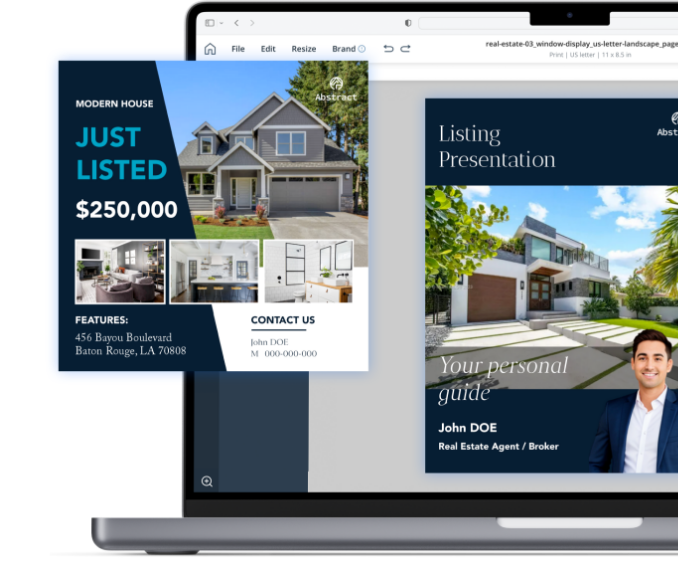
That’s what Xara’s AI Social Media Manager for real estate is designed to handle.
Xara uses real estate context such as an agent’s market, audience, listings and brand to research fresh content ideas and plan a mix of real estate advice, local market content, client questions and listing posts.
It then creates the captions and visuals, schedules the content, and can either send posts for approval or post them automatically across Facebook, Instagram and LinkedIn.
So an agent is not starting every week with a blank prompt asking an AI tool: “What should I post?”
The topics are part of the system.
That distinction matters because generic content can keep an account active without giving a potential client much reason to remember the person behind it. Useful local content should reflect the agent, the market they serve and what is actually happening around them.
Xara already automates listing marketing when homes are added or their status changes. Social Media Manager extends that beyond listing events with ongoing real estate advice, buyer and seller education, local market content and neighborhood topics.
See how Xara approaches real estate social media marketing.
Build a content mix, not a list of random posts
You do not need to work through these 59 ideas in order.
A useful real estate social media mix might rotate between:
- Client education: answer a buyer or seller question.
- Local expertise: explain something happening in the market or community.
- First-hand expertise: show how you work or what you notice.
- Client proof: show a result, story or testimonial.
- Listings: promote active inventory with different angles.
- Conversation: ask something people can respond to.
The right balance depends on your business, audience, market and current listings.
If you want a ready-made schedule rather than a list of ideas, link this section to the 30-Day Real Estate Social Media Calendar once published.
For the broader strategy, including platforms, content planning and how social media fits into real estate marketing, link to the Social Media for Real Estate Agents hub once published.
Frequently asked questions about real estate social media posts
What should real estate agents post on social media besides listings?
Real estate agents can post buyer and seller education, local housing-market updates, neighborhood and community information, answers to common client questions, behind-the-scenes expertise, client stories and explanations of common real estate misconceptions.
The strongest posts tend to contain something specific to the agent’s actual market or experience rather than information that could have been posted by any agent in the country.
What makes a good real estate social media post?
A good real estate social media post is specific, useful and easy to understand.
“Here’s what’s happening in the market” is vague.
“Inventory in [area] increased from X to Y homes this month. Here’s what that changes for buyers” gives the reader a concrete reason to pay attention.
Good posts also distinguish facts from opinion and use trustworthy sources for financial, regulatory or market claims.
How often should a real estate agent post on social media?
There is no universal posting frequency that works for every real estate agent.
A sustainable flow of useful content is more important than posting every day simply to fill the calendar. Frequency should depend on the agent’s audience, platforms, available content and ability to maintain quality.
A content calendar can help maintain a useful mix without repeating the same kind of post.
Should real estate agents only post on Instagram?
No. Different platforms serve different audiences and formats.
Xara currently supports automated posting to Facebook, Instagram and LinkedIn. See Xara’s supported real estate social media workflow.
Rather than opening every available social network, agents should consider where their audience actually spends time and whether they can provide useful content consistently there.
Can real estate agents use AI to create social media posts?
Yes, and many already do. In the 2026 REALTORS® Technology Report, social media posting was the second most common AI use case among REALTORS® who use AI, at 56%.
The important question is not simply whether AI wrote the copy. It is whether the post is accurate, useful, current and specific enough to reflect the agent’s actual market and business.
How do I come up with real estate social media ideas every week?
Start with information already around you:
- questions clients asked this week
- current listings
- recent transactions
- your local MLS data
- market changes
- upcoming local events
- new businesses or developments
- misconceptions you corrected
- parts of your job clients rarely see
Those inputs are much more likely to produce useful content than starting with a blank prompt and asking for generic “real estate post ideas.”
Xara’s Social Media Manager takes a similar approach at scale: it uses the agent’s market, audience, listings and brand context to research and plan fresh content rather than relying only on a static library of posts.
Give potential clients a reason to remember you
Listings show people what you sell.
Your wider social media presence can show them what you know.
Answer the questions clients ask. Explain the market you actually work in. Share what you notice. Talk about the community. Show how you approach your work. And when you do post a listing, give people more than information they could already find on the property portal.
That’s how a social feed becomes more than a sequence of listing announcements.
Want to see how Xara researches the topics, creates the posts and keeps the calendar moving automatically?





 No credit card or phone number required.