TL;DR: Facebook can still be a useful place for real estate agents to connect with potential clients, stay in touch with past clients and share what they know about their local market. But a feed that only announces properties won’t give people many reasons to follow you. The better approach is to mix property updates with local news, buyer and seller advice, real client questions and examples from your work. This guide covers what to post, how to use Facebook groups and ads, and how to keep your page active without spending your evenings writing captions.
Is Facebook still worth it for real estate agents?
Think about the last time you looked up a local business on Facebook. Now imagine a stranger doing the same thing with your real estate business. They’ve seen your name on a sign, heard about you from a neighbor or come across one of your properties, and they visit your Facebook page to get a feel for who you are.
What do they find?
If it’s three Just Listed graphics from April and nothing since, they haven’t learned much. If they find a recent market update, a helpful answer to a buyer’s question and a post about a local café you love, they get a real sense of your knowledge and personality.
Social platforms are a significant part of real estate marketing for agents. According to the National Association of REALTORS® 2025 Technology Survey, 75% of respondents used social media in their real estate business, and 39% said it produced their highest number of quality leads, compared with 23% for CRM systems and 17% for their local MLS. Those figures cover social platforms generally, not Facebook alone, and they don’t mean every agent will get leads from posting. They do show why a thoughtful presence is worth having, and you don’t need to become a full-time content creator to build one.
What actually works in real estate Facebook marketing
Facebook for real estate agents works best as a conversation, so before worrying about posting frequency, Reels or ads, start with a simpler question:
Why would someone want to see your posts if they weren’t buying or selling a house right now?
Someone who bought a home from you two years ago probably doesn’t need five new listing posts a week, but they might care what’s happening to prices in their neighborhood, which restaurant just opened nearby or what a mortgage-rate change could mean.
Know your target audience
You don’t need an elaborate persona document, just a clear picture of the people you actually work with. Maybe you help first-time buyers understand the process, or most of your work comes from homeowners who’ve lived in the same area for years, or you work with people relocating to your area. They won’t all care about the same things: a first-time buyer might stop scrolling for a post explaining closing costs, while a longtime homeowner might want to know what similar homes nearby have recently sold for.
Write like you’re talking to your clients
You can share exactly the same information in two very different ways.
Version one: “Q3 residential real estate market update. Inventory increased 8% month over month.”
Version two: “There are 41 more homes for sale in [town] than there were last month. If you’ve been waiting for a little more choice, this is worth paying attention to.”
Both communicate a market change, but the second explains why someone might care. You don’t have to sound like a market report to show people you understand the market.
8 Facebook post ideas for real estate agents
You don’t need to reinvent your content every week. Most of the best ideas come from things you’re already doing: answering questions, touring homes, checking market data, visiting properties and spending time in your community. Here are eight Facebook post ideas for real estate agents to start with, each with an example you can adapt.
1. Share local market updates people can understand
Your clients don’t look at real estate market numbers all day, and a headline about prices or inventory doesn’t tell them whether it applies to their street. Choose one or two current statistics from your MLS and explain what’s happening.
Example: “Something interesting is happening in [town] this month.
We had 43 active listings at the end of November, compared with 31 at the end of October. That’s more choice for buyers, although it doesn’t necessarily mean prices are coming down.
If you’re thinking about moving, here’s what I’d look at next: how long homes are staying on the market and what they’re actually selling for.”
Best format: a simple graphic with one statistic and a conversational caption.
2. Answer the questions buyers and sellers ask you
If you’ve explained something to three buyers or sellers this month, it’s probably a post: whether you really need 20% down, what happens after an offer is accepted, whether to renovate before selling, or how you decide on a list price. Pick one and answer it the way you would across a table.
Example: “A buyer asked me recently whether getting pre-approved means their mortgage is guaranteed.
Short answer: no. Pre-approval is an important step, but the lender still needs to review the final loan and property details before closing.
If you’re house hunting, it’s worth understanding that difference before you start making offers.”
For mortgage information, link to reliable sources such as the Consumer Financial Protection Bureau’s homebuying guidance. Best format: a short talking-head video or a simple Q&A post.
3. Talk about your neighborhood and community
This is one of the easiest ways to make your page feel like it belongs to a real person. You know things about your area that someone searching for homes online doesn’t: a café has reopened, the farmers market has moved, there’s a new walking trail or a road closure people should know about. Share it.
Example: “The Saturday farmers market has moved behind the library this month.
A small recommendation if you’re going: get there early. The bakery stall usually sells out of my favorite sourdough before I arrive. Here’s the organizer’s page if you want to check the hours.”
It shows you’re part of the community you work in, and it keeps you in mind when neighbors start thinking about moving, which is often where leads begin. One note: keep neighborhood descriptions factual and inclusive. The U.S. Department of Housing and Urban Development explains the protections that apply to housing ads, so describe amenities, transport, parks and local businesses rather than suggesting an area suits particular protected groups. Best format: a photo, short video or local recommendation with a useful link.
4. Ask a question people might actually answer
Not every Facebook post needs a graphic. Sometimes a simple question is enough, like “What’s one local restaurant you think more people should know about?”, “Would you rather have a bigger kitchen or a bigger backyard?” or “What’s one thing you wish you’d known before buying your first home?” Keep the questions natural, and when someone answers, answer back. A conversation is worth more than a pile of comments you never reply to. Best format: plain text, a photo or a simple poll.
5. Let people see the person behind your brand
People may know which brokerage you work for and recognize your logo, but they probably don’t know much about you. You don’t need to share your private life. Talk about why you became an agent, something you learned from a difficult transaction or what a typical day looks like.
Example: “When I started in real estate, I thought most of my job would be showing homes.
I didn’t realize how much time I’d spend helping people make difficult decisions. Sometimes the most useful thing I do in a week isn’t finding someone a house. It’s helping them decide whether the house they’re considering is actually right for them.”
That tells people how you approach your work. Best format: a genuine photo and a caption in your own words.
6. Share client stories alongside your Just Sold posts
A Just Sold post tells people a transaction happened. A client story shows what working with you was like: maybe you helped a seller prepare without unnecessary renovations, or a buyer changed their search after a few showings. With the client’s permission, tell that story.
Example: “When we first started looking, my buyers were convinced they needed four bedrooms.
After a few showings, we realized the layout mattered more to them than the extra room. We changed the search, found a home that suited how they actually live, and they’re now settling in.
Sometimes the first wish list isn’t the final one.”
You don’t need confidential details or dramatic outcomes. A small, genuine story is enough. Best format: client-approved photos, a short story or a carousel explaining the journey.
7. Make your listing posts more interesting
Post your listings, but give people more than the address, price and bedroom count. Think about what you noticed on your first visit: a feature you loved, something unusual about the layout, a detail that doesn’t come across in photos.
Example: “The photos of this home show a beautiful kitchen.
What they don’t really show is how the kitchen opens onto the backyard. When you’re standing there, the whole space feels connected. If you’d like to see it in person, we’re holding an open house this Saturday from 1 to 3.”
That sounds like an agent describing a property they know, which makes better marketing than copying the MLS description. Best format: a short property video, carousel or photo with a specific observation.
8. Use Facebook Reels, Stories and Live
Short vertical video is a format Facebook actively promotes, and it doesn’t need to be polished. Try a 30-second property tour of one standout room, “the one thing I always check at a showing,” or a 45-second market update filmed in the car. Facebook Stories disappear after 24 hours, which makes them a low-pressure place for an open house countdown or a quick poll. Facebook Live works for a monthly Q&A about buying and selling, or a virtual walkthrough for people who can’t make it in person. Best format: a vertical video under a minute, shot on your phone.
For more ideas, see our 59 real estate social media post ideas beyond listings or use the 30-day real estate social media calendar to map out your next month.
How to promote listings on Facebook and make every property post stand out
A listing gives you several chances to share something useful, so you don’t need to repeat the same announcement each time.
Just Listed: tell people what makes the home interesting. Instead of opening with “NEW LISTING!”, start with a detail that deserves attention, like the natural light, the outdoor space, an unusual layout or a renovation worth explaining, then add the essentials and a clear way to get in touch.
Open House: make it easy to attend. Give people the address, date, time and what they’ll see, and consider creating a Facebook Event and sharing it where appropriate.
Price Reduction: explain the update without overselling it. Share the new price, the updated details and any relevant market context, without manufacturing urgency or revealing the seller’s reasoning.
Under Contract and Just Sold: explain what happened. Think about what future buyers or sellers could learn from the transaction, share what you can substantiate and respect client confidentiality.
How to use Facebook groups without becoming the agent everyone ignores
You probably know the kind of group we mean. Someone asks for a local plumber, another person shares photos from the weekend market, and there’s a long discussion about a road closure. Then a business drops in with an unrelated promotional link. Don’t be that business.
Local Facebook groups are useful for meeting people and understanding what’s happening in your community, but they work best when you take part as a neighbor who joins the conversation. A few tips:
- Read the group rules. Some groups ban promotion, others set aside specific days for it.
- Join conversations before starting your own. Answer questions when you have something helpful to add.
- Share relevant local information. A verified local update beats another listing link.
- Be transparent about your business. If you’re taking part professionally, don’t disguise it.
Groups differ, too: a local discussion group, a local business group and a real estate referral group serve different purposes, so choose the groups where you can genuinely contribute.
Should you use a Facebook business page or your personal profile?
They do different jobs.
Your business page is the professional home for your real estate presence: it displays your business information, hosts your posts and gives you access to ads and page insights.
Your personal profile is where you probably already have relationships with friends, neighbors, former colleagues and people you’ve worked with.
Use both, with the distinction clear: publish a local market update on your page, for example, and share it to your profile with a short personal comment, checking Meta’s rules and your brokerage’s policies first. For automated publishing, Xara’s Social Media Manager works with connected Facebook pages rather than personal profiles.
Facebook vs. Instagram vs. LinkedIn for real estate agents
Each platform works a little differently, so think about how people use each one.
| Platform | Useful for | Example content |
|---|---|---|
| Local conversations, business updates, local information, listing posts and client education | A local market update with a longer explanation and a question | |
| Visual storytelling, short videos, carousels and property features | A Reel showing one standout room in a listing | |
| Professional expertise, industry relationships, referrals and brokerage updates | A market analysis with a professional takeaway |
Say inventory rises in your market. On Facebook, you might explain what buyers are noticing and ask if people have seen more For Sale signs nearby. On Instagram, you could turn the figures into a three-slide carousel, and on LinkedIn you might focus on what it means for referral partners. Same information, different presentation.
Facebook posting tips: how often to post and a weekly plan
There isn’t a magic number. Three useful posts a week can be a sensible starting point if you’re building a marketing routine, but it isn’t a proven formula for reach or leads. What matters is whether the posts are useful and whether you can keep up the rhythm. Here’s one simple example:
| Day | What to post | Example |
|---|---|---|
| Monday | Local market or community update | “Here’s what changed in our housing market last month.” |
| Wednesday | Buyer or seller education | “A question I keep getting about pre-approval…” |
| Friday | Listing, client story or personal insight | “Here’s something the listing photos don’t show.” |
You can move those days around. If a listing goes live on Tuesday, post it on Tuesday, and if something interesting happens locally on Thursday, talk about it then. Your calendar should make decisions easier. For a more detailed plan, see our 30-day calendar.
Make more than one post from the same idea
Here’s a tip that saves hours. Suppose you record a two-minute video explaining your local market. You could turn it into the original Facebook video, a shorter clip focused on one statistic, a graphic showing the key number and a follow-up post answering a question someone asked. Meta Business Suite lets you schedule them for your Facebook page.
How to make a Facebook page as a real estate agent
If you’re setting up a real estate Facebook page for the first time, or yours hasn’t been updated in years, start with these setup tips. If you work for a real estate agency, check its brand rules first.
- Create or review your page. Choose a real estate category and a page name people already know you by, such as your own name plus your market.
- Add a recognizable profile photo. A clear headshot is often the practical choice for an individual agent.
- Update your cover image with something relevant to your market, brand or business.
- Check your contact information. Website, phone number, email and service area should all be accurate.
- Add a useful description explaining where you work and what real estate services you provide.
- Publish a few useful posts so visitors have something current to read before you promote the page.
Meta’s Facebook business resources are the best place to check current setup options, since the interface changes. A complete page won’t automatically attract new business, but it makes it easier for someone who finds you to understand who you are and how to contact you.
Real estate Facebook ads: do they work for agents?
Facebook ads can be useful for real estate agents, but they’re a different activity from posting organically. Organic Facebook content helps you share information and talk with people who find your page, while paid ads put a message in front of an audience within Meta’s targeting rules. They make sense when you have a clear objective, such as promoting an open house or collecting leads with a home valuation offer.
Lead ads
Lead ads collect leads through a form inside Facebook. If you’re offering a buyer guide or a home valuation consultation, be clear about what the person will receive and how you’ll use their information, and know how you’ll follow up on every lead.
Carousel ads
They display multiple images or cards. For a listing that might mean several rooms or property features, and for a brokerage it could mean highlighting several available properties.
Housing advertising rules
Meta applies special requirements to housing-related ads, and some targeting options available for other categories are restricted. Facebook custom audiences, built from your own contact list or website visitors, are one option, but check Meta’s current advertising guidance and HUD’s Fair Housing resources before you launch, and judge a campaign on relevant leads, conversations and appointments, since likes alone say little. More in our guide to real estate Facebook ads.
Real estate Facebook marketing mistakes worth avoiding
Most Facebook marketing tips tell you what to do. These tell you what to stop:
- Posting only listings. They matter, but give people other reasons to follow you.
- Writing every caption like an advertisement. You can be professional without sounding like a brochure.
- Sharing market statistics without context. Say what the numbers mean, where they came from and when they were measured.
- Posting generic content that could come from any agent. Your market and your clients’ real questions are better starting points.
- Ignoring comments and messages. If you invite conversation, make time for it, because slow replies are how warm leads go cold.
- Making claims you haven’t checked. Financing, property values, disclosure rules and local information all deserve care.
- Changing your whole approach after one quiet week. Review results over a meaningful period and look for patterns instead of reacting to individual posts.
Perhaps the biggest mistake is assuming that being active is the same as being useful.
What if you don’t want to research, write and schedule every piece of Facebook content yourself?
Keeping your Facebook content relevant month after month is the hard part. New listings come in, market conditions shift, and buyers and sellers have new questions. A list of Facebook post ideas can get you started, but a strong Facebook presence needs fresh, useful content that reflects what’s happening in your market right now.
That’s where Xara’s AI Social Media Manager comes in. Rather than relying on a static collection of generic real estate posts, Xara builds a content queue from an agent’s listings, local market, audience and brand context. It handles two kinds of content.
Updates from current listings
When listing information changes in the MLS, Xara can create content for moments such as Just Listed, Open House, Price Reduction, Under Contract and Just Sold, using the listing information and photos with the agent’s details and brokerage branding applied.
Content for when nothing new has been listed
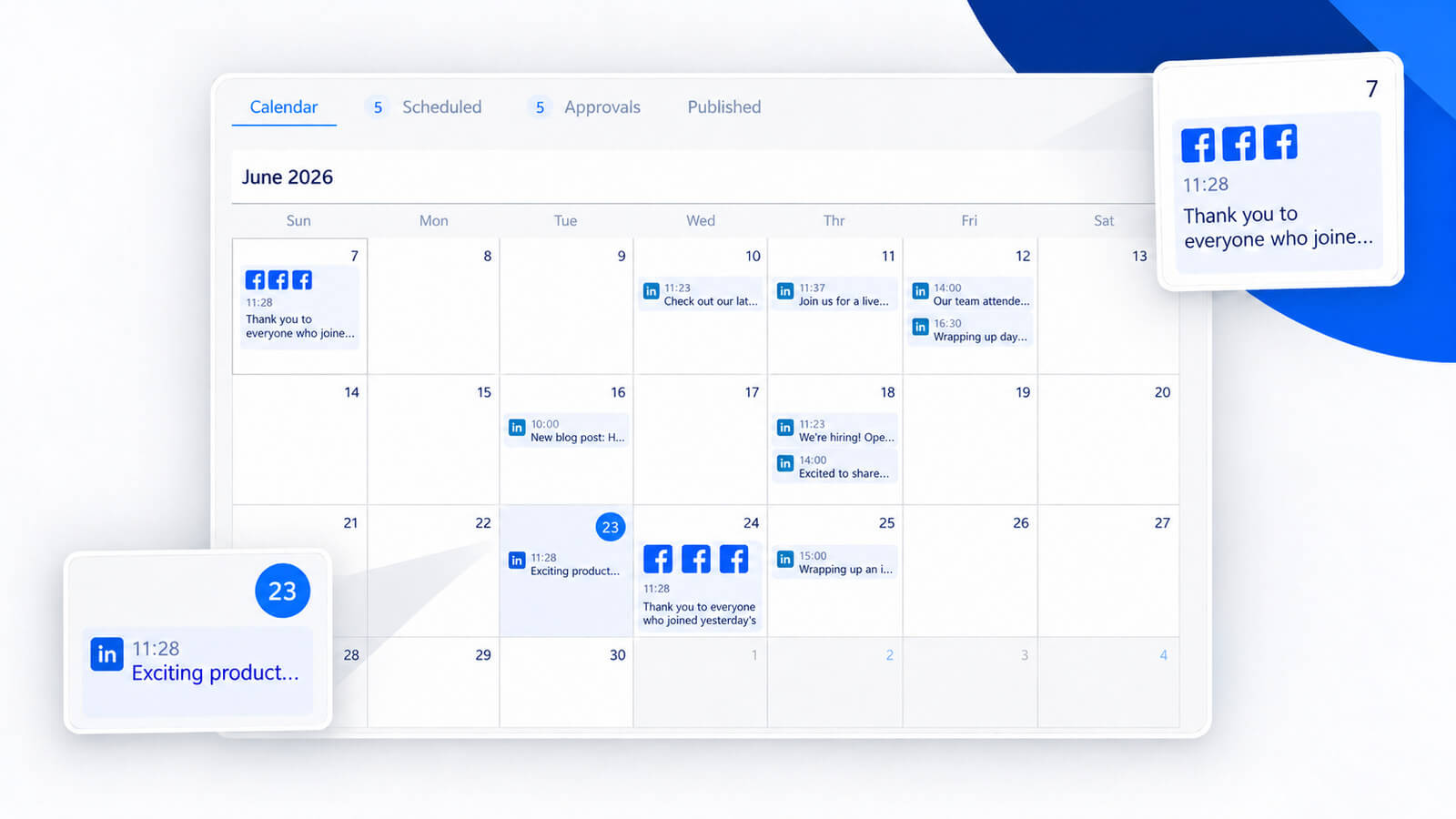
This is where the wider Facebook content strategy comes in. Xara can research and create posts around local market updates, neighborhood information, buyer and seller education, seasonal topics and agent expertise. It writes the captions, creates the visuals and schedules posts to connected Facebook pages, as well as Instagram and LinkedIn. The queue updates as the MLS changes, agents and brokerage admins can review, edit or remove posts, and automatic publishing can keep content moving without manual approval of every item.
The agent doesn’t disappear from the process. Your conversations, personal experience and replies are still yours, and the goal is to make sure your Facebook page has useful content between those moments.
What does this look like for real estate teams?
There’s already customer feedback. On Xara’s customer stories page, a real estate customer describes the impact this way:
“Xara supercharged my real estate social media engagement and branding.”
That’s one customer’s experience, and results vary for every agent.
For a brokerage example, Collier & Associates uses Xara to support listing marketing across more than 250 agents. Its customer story reports roughly 650 marketing pieces produced per week, with 31% of campaigns automatically posted to social media. Those figures describe Xara’s listing-marketing automation at that brokerage, not Facebook-only results.
If you’re wondering how to keep your Facebook presence useful without planning every post yourself, see how Xara’s Social Media Manager works.
Facebook for real estate agents: FAQs
What is the best social media platform for realtors?
It depends on where your audience is. Facebook suits local conversations, community information and staying in touch with your network, Instagram suits visual storytelling, and LinkedIn suits referrals and professional relationships. Most realtors do better doing one or two platforms well than being thin on all three.
Do real estate agents still use Facebook?
Yes. Facebook can still be useful for sharing local information, staying in touch with your network and answering buyer or seller questions. How useful it is for you depends on whether your audience uses it and whether what you share is relevant to them.
What are the best Facebook ads for realtors?
It depends on your objective. Lead ads suit a specific offer such as a home valuation or buyer guide, and carousels suit showing several homes at once. Whatever you choose, follow Meta’s housing ad rules and judge results by the relevant leads they bring in.
What is the best Facebook marketing strategy for real estate agents?
A simple mix: a few useful posts each week, one or two active local groups, a Facebook Event for each open house and the occasional paid ad for a specific offer. Reply quickly, since fast replies turn leads into conversations, and review results over a few months before changing course.
Can AI write Facebook posts for real estate agents?
Yes. AI can help research topics, draft captions, create visuals and organize content. What matters is whether the output is accurate, current and relevant to your market, which is why Xara builds posts from listing, market and brand context rather than relying only on generic prompts.
Give people a reason to follow your Facebook page
Facebook for real estate agents doesn’t need a clever trick. Start with what you already know: the questions clients ask, the changes you’re seeing in your market, the places you genuinely recommend and the lessons you’ve learned helping people buy and sell homes. Share those things in a way that sounds like you.
A listing announcement tells someone you have a property for sale. A useful real estate Facebook presence helps them understand the person they’d be working with, and if you’d rather have the research and scheduling handled for you, with your brand and local focus intact, Xara can take that marketing work on.
See how Xara plans, creates and posts real estate social content for your agents.




 No credit card or phone number required.